People often ask what intuitive eating actually looks like in real life. While the principles of intuitive eating can be taught and discussed, many people find it helpful to see concrete examples. In this two part blog, my colleague Libby Stenzel, RD, and I are each sharing what a typical day of intuitive eating looks like for us. Our examples are not meant to be prescriptive or representative of what intuitive eating should look like for everyone. Rather, they offer a glimpse into how two people in long-term recovery use hunger, fullness, appetite, satisfaction, and flexibility to guide their eating.
Before I walk you through a typical day of intuitive eating for me, I want to provide some context.
Intuitive eating is often misunderstood as simply eating whatever you want, whenever you want. In reality, intuitive eating relies on the ability to notice and respond to your body’s internal cues, including hunger, fullness, appetite, satisfaction, and energy levels.
For many people recovering from an eating disorder, intuitive eating is not the starting point. Most individuals need a period of more structured or mechanical eating to restore nutritional status, normalize eating patterns, and rebuild trust with their bodies. This structure often comes in the form of a meal plan, eating schedule, or guidance from a treatment team.
It’s also important to recognize that hunger and appetite cues are not always reliable. Certain medical conditions, mental health conditions, medications, periods of high stress, and other life circumstances can make it difficult to accurately perceive or respond to these signals. When that happens, a more mechanical approach to eating may still be necessary, even for someone who has been in recovery for many years.
In my case, I have been in solid eating disorder recovery for over twelve years. While I have a medical condition that can affect my hunger and appetite cues, it is currently well-managed. As long as I am not under significant stress, I experience fairly consistent hunger, fullness, and appetite signals. Because of that, most of my eating is guided by internal cues, though I still use structure when needed.
What follows is not a blueprint for how everyone should eat. It is simply an example of what intuitive eating looks like in my life at this stage of recovery.
When I wake up, I don’t immediately think about what I’m going to eat. Instead, I start with a general assessment of how I’m feeling. How’s my energy? How’s my mood? I take a quick look at my calendar to see what I have planned for the day. Knowing whether I have a busy workday, a long drive, a workout, or an emotionally demanding schedule helps me understand what my body might need from me.
The first thing I do is have a glass of water with electrolytes or a hot cup of tea. Both feel grounding, comforting, and hydrating.
Within an hour or so of waking, I usually start noticing hunger cues. At that point, I ask myself a simple question: “What sounds good?”
Sometimes an answer comes to mind immediately. Other times, nothing sounds appealing and I feel a little stuck. When that happens, I don’t force myself to choose a specific food. Instead, I get curious about the sensory qualities that sound appealing. Do I want something sweet? Salty? Sour? Spicy? Warm? Cool? Crunchy? Gooey?
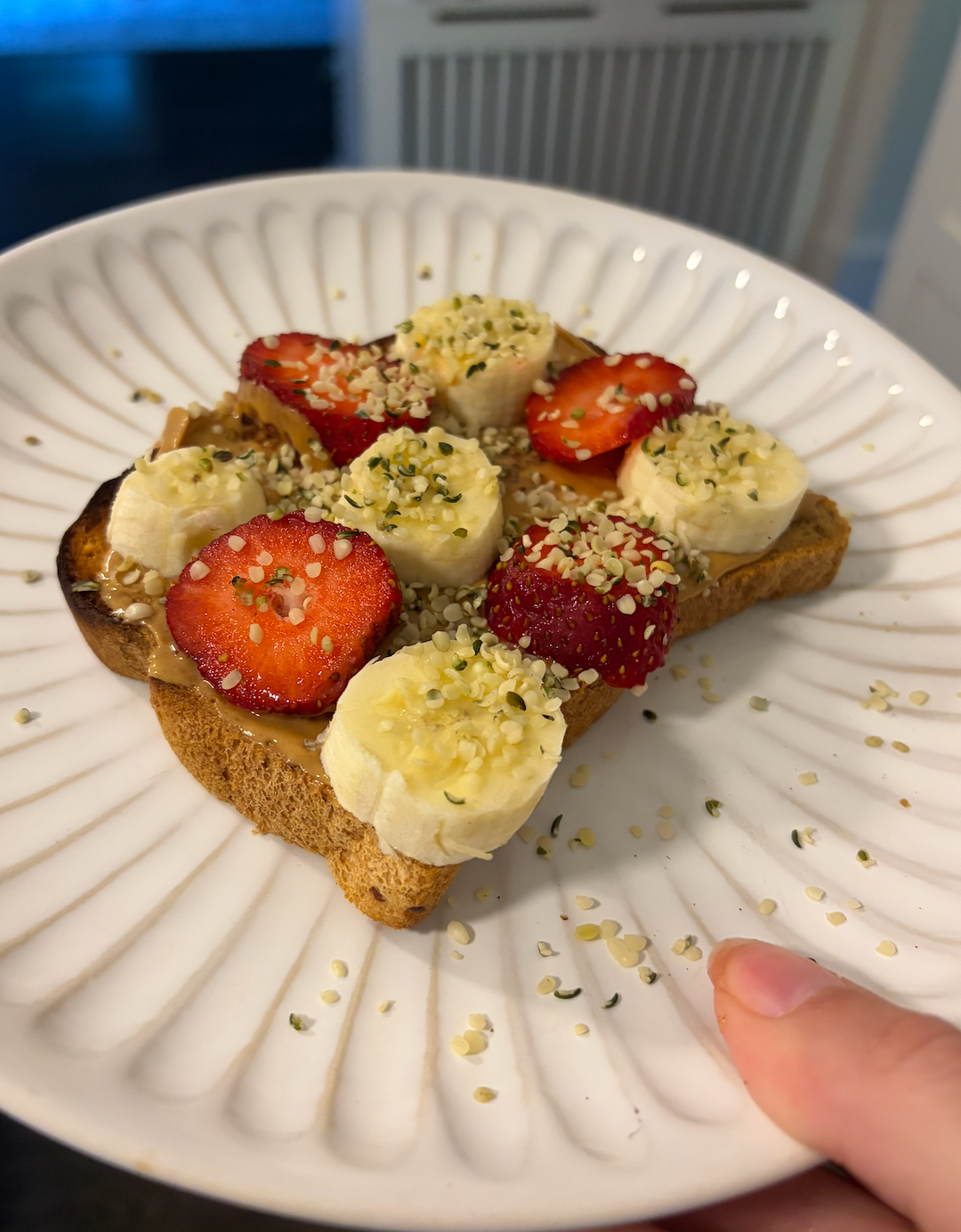
Most of the time, one or two qualities stand out. Even if I don’t know exactly what I want to eat, identifying those qualities gives me direction. For example, if nothing specific comes to mind but something sweet and gooey sounds satisfying, I might make oatmeal or a quick version of French toast with syrup. If I am craving something cool and crunchy, I might have yogurt with granola or a smoothie with a side of toast.
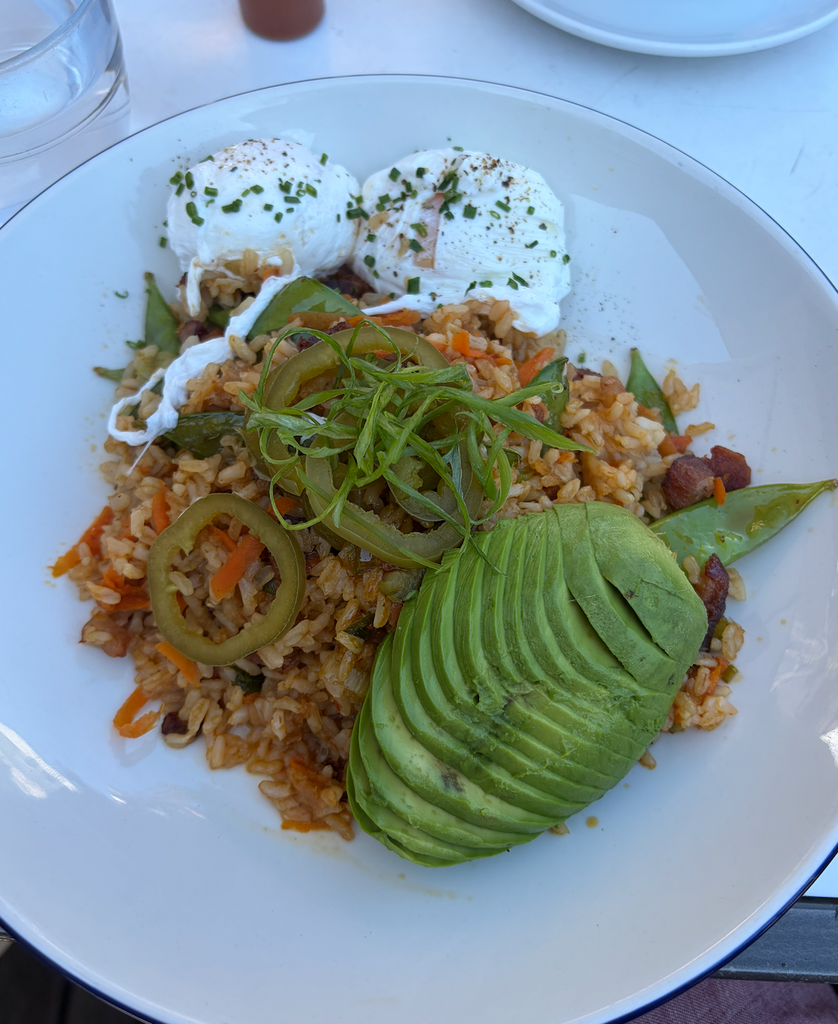
This process usually takes less than a minute, but it helps me move away from food rules and toward paying attention to what my body is actually asking for that day.
While I generally eat intuitively, I still use a few gentle guidelines that originated during my recovery. I don’t think of them as rules. Instead, they’re tools that help me stay nourished, especially when life gets busy.
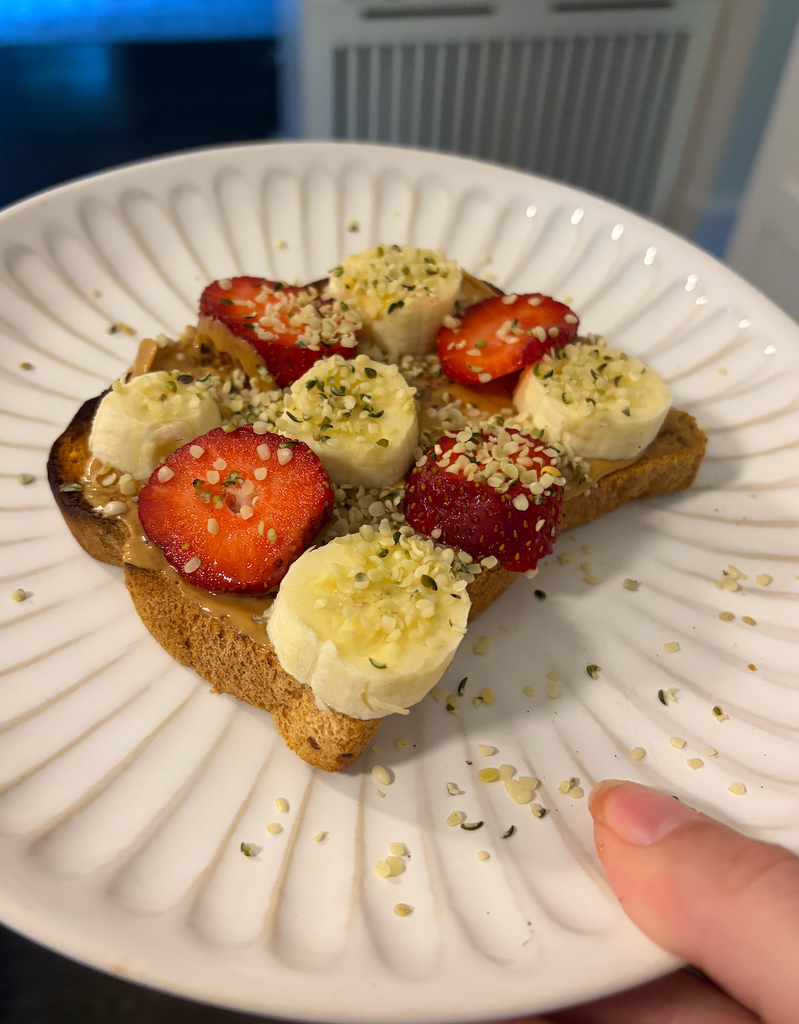
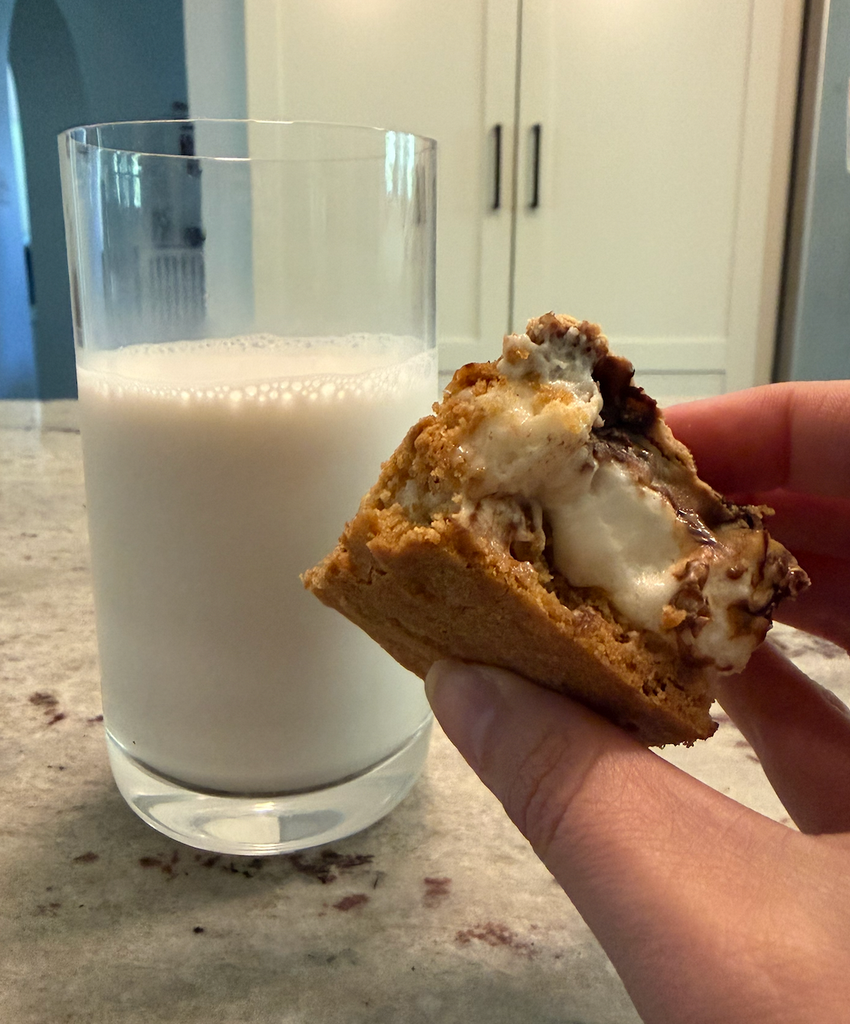
One guideline I often use is that a snack is usually at least two things and a meal is usually at least three things. This isn’t because there’s a perfect formula for eating. Rather, it helps me build meals and snacks that are more likely to be satisfying and sustaining. In practice, this often means including some combination of carbohydrates, fats, and protein. Here’s an example: if I am craving something sweet and hearty for a snack, I might have a banana with big ole scoop of peanut butter or a cookie with a tall glass of milk. If I am craving something savory and crunchy, I might have crackers and hummus or cheese and pretzels.
Most of the time, my hunger, fullness, and appetite cues are fairly reliable. However, there are situations where those cues become quieter. When I’m highly stressed, sick, traveling, or taking medication, I may not feel hunger in the same way I normally do. During those times, I shift toward a more mechanical approach to eating. Rather than waiting for hunger, I make sure I’m eating regularly throughout the day.
I also pay attention to broader signs of whether I’m meeting my body’s needs. How is my energy? My concentration? My mood? Am I recovering well from exercise? Is food becoming harder to remember or prioritize? Occasionally, I may use my weight as one piece of information, particularly if I know my appetite has been suppressed for an extended period of time. If I notice signs that I’m under-fueling, I intentionally increase my intake.
Often, the easiest way for me to do this is by adding calories in ways that feel manageable. That might mean making portions a little larger, adding an extra snack, or including more caloric beverages such as milk, smoothies, or other nourishing drinks.
For me, intuitive eating doesn’t mean relying on internal cues 100% of the time. It means having the flexibility to respond to what my body needs, including using structure when my usual signals aren’t available.
Similar to Libby, I usually have something sweet every day. This feels important to mention because sweets were one of the foods my eating disorder feared most.
While Libby has her everyday chocolate, my sweet tends to vary. I often go through phases where I’m drawn to a particular food for a week or two and then naturally lose interest. Sometimes I’m in a dried fruit phase and enjoy dried mango or pineapple after a meal. Other times, I find myself reaching for Nerds Gummy Clusters, mini marshmallows, a cookie, or a slice of banana bread.
One of the most surprising lessons I learned in recovery was that cravings often have a natural lifespan. My eating disorder convinced me that if I started eating sweets, I would never be able to stop wanting them. It feared that eating a cookie today would lead to wanting cookies forever.
My actual experience has been the opposite. When I stop restricting sweets, my cravings tend to ebb and flow. A food that sounds amazing this week may sound completely uninteresting next week. Then, months later, I might find myself wanting it again.
This experience has helped me build trust in my body. Rather than viewing cravings as something to fear or control, I’ve learned to see them as information. Sometimes my body wants something sweet. Sometimes it doesn’t. Both experiences are normal.
At the end of the day, my favorite thing about intuitive eating is how peaceful I feel. When my eating disorder was active, the end of the day was often fraught with preoccupied and ruminative thoughts about food and my body. I’d feel guilty if I thought I ate too much or feel pressure not to “ruin a good day” if I somehow managed to follow all of the eating disorder’s rules that day. Many nights, my sleep was disrupted by hunger pangs from restricting or stomachaches from bingeing.
Now, at the end of the day, my biggest concerns are figuring out how to get into bed without disrupting my sleeping dog and staying awake long enough to catch at least some of a show with my partner.
If you’ve read this and thought, “My eating doesn’t look anything like that,” that’s okay. The goal of intuitive eating isn’t to eat like Libby or me. The goal is to develop a trusting relationship with your own body and learn to respond to its unique needs. What that looks like will vary from person to person and may change throughout different seasons of life. For me, intuitive eating isn’t about eating perfectly. It’s about having enough trust, flexibility, and peace around food that I can spend my time and energy focused on the things that matter most. Stay tuned for Part 2 so you can see how Libby approaches a day of intuitive eating!